
Que signifie être un homme de famille dans une société matrilinéaire ? Masculinité et autonomisation des femmes chez les Akan, au Ghana
Publié 2025-12-11
Mots-clés
- société matrilinéaire,
- masculinité,
- autonomisation des femmes,
- intersectionnalité,
- le Ghana
© Mihye Shin (Author) 2025

Cette œuvre est sous licence Creative Commons Attribution - Pas d'Utilisation Commerciale - Pas de Modification 4.0 International.
Comment citer
Résumé
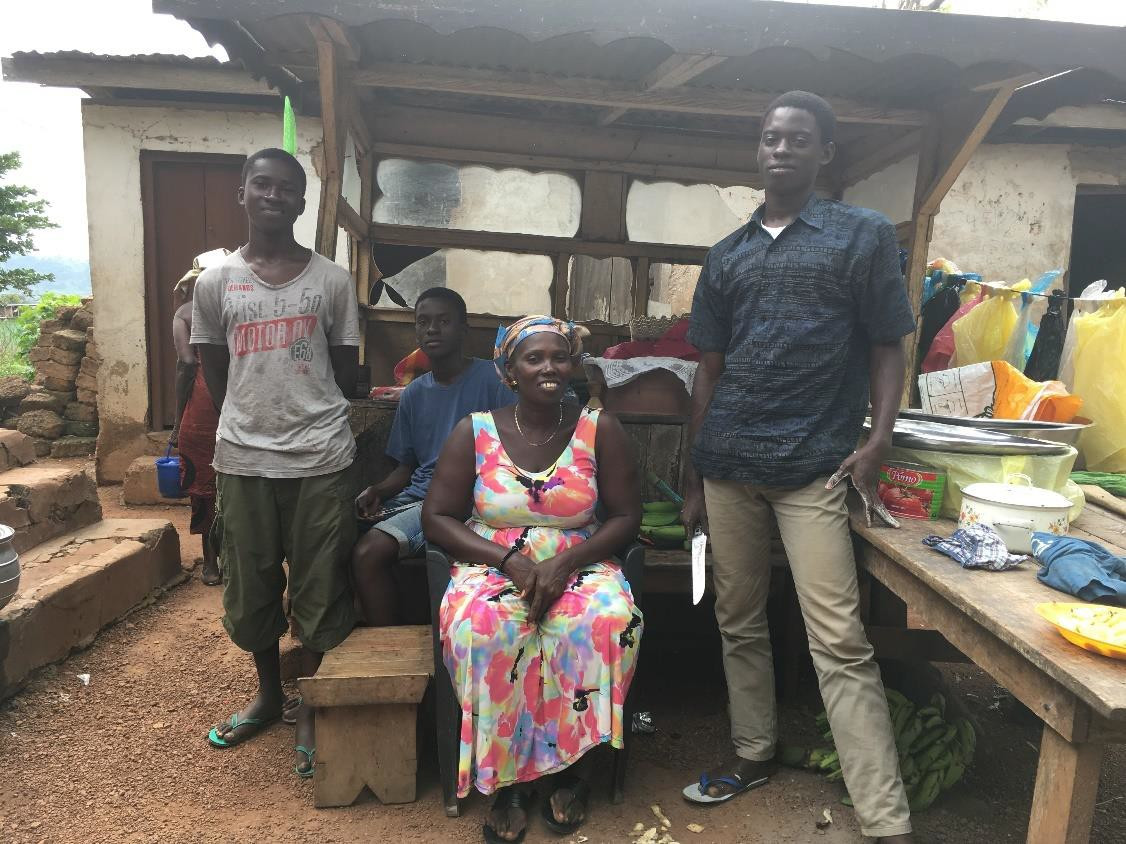
La définition des masculinités idéales (hégémoniques) a évolué au fil du temps et selon les contextes sociaux. Cette étude explore le récit des vies et des expériences du peuple Akan au Ghana à travers une perspective ethnographique. Les communautés Akan ont une structure matrilinéaire, mais des valeurs patriarcales y sont ancrées. En se concentrant sur les pratiques et les notions de masculinité à travers les générations dans ce contexte du patriarcat matrilinéaire, la recherche examine comment les gens perçoivent les changements dans les masculinités idéales et leur relation au pouvoir genré au sein de la famille et à l'autonomisation des femmes. Dans la société matrilinéaire, la paternité et la maternité traditionnelles demeurent centrales en tant qu'identités genrées et en tant qu'institutions qui soutiennent le patriarcat. Pour saisir plusieurs dimensions sociales qui renforcent et reproduisent le pouvoir patriarcal, cette étude adopte un cadre intersectionnel. À travers un parcours ethnographique, la recherche offre un récit réaliste des masculinités et de la vie quotidienne à Agogo, au Ghana. Bien que certaines conclusions puissent sembler critiques envers les hommes Akan, elles reflètent la réalité vécue des communautés matrilinéaires comme une autre expression de la société patriarcale.
(en anglais)
Références
- References
- Adinkrah, M. (2012) 'Better Dead than Dishonored: Masculinity and Male Suicidal Behavior in Contemporary Ghana', Social science & medicine 74(4): 474-481.
- Adomako, A., J, Boateng. (2007) Multiple meanings of manhood among boys in Ghana, in Shefer, T. (eds) boys to men: social construction of masculinity in contemporary society, pp.50-74. Landsdowne: University of Cape Town Press.
- Adomako, A., Okyerefo, M.P.K. and Pervarah, M. (2009) ‘Phallic Competence: Fatherhood and the Making of Men in Ghana’, Culture, Society & Masculinity, 1 (1): 5978.
- Agar, M.H. (1996)'The Professional Stranger: An Informal Introduction to Ethnography.: Academic Press.
- Akeampong, E. and Pashington, O. (2005) Spirituality, gender, and power in Asante history in Oyěwùmì, O. (eds.) African Gender Studies : A Reader. (1st ed. edn) New York : Palgrave,.
- Amadiume, I. (2005) ‘Theorizing matriarchy in Africa: kinship ideologies and systems in Africa and Europe’, in O. Oyeronke (eds) African Gender Studies A Reader, pp. 83-98. US: Palgrave Macmillan.
- Awusabo-Asare, K. (1990) 'Matriliny and the New Intestate Succession Law of Ghana', Canadian Journal of African Studies / Revue Canadienne des Études Africaines 24(1): 116.
- Banner, L. (1989) ‘How Men Feel: Their Response to Women's Demands for Equality and Power’, Journal of Women in Culture and Society, 14(3): 703-708.
- Bannon, I. and M. Correia (2006) The Other Half of Gender : Men's Issues in Development. Washington, DC : World Bank,.
- Bawa, S. (2017) 'Christianity, Tradition, and Gender Inequality in Postcolonial Ghana',
- African Geographical Review : 1-16.
- Butler, J. (1988) 'Performative Acts and Gender Constitution: An Essay in Phenomenology and Feminist Theory', Theatre journal 40(4): 519-531.
- Chodorow, N. (1979) The Reproduction of Mothering : Psychoanalysis and the Sociology of Gender. Berkeley, Calif. : University of California Press,.
- Christ, C.P. (2016) 'A New Definition of Patriarchy: Control of Women’s Sexuality, Private Property, and War', Feminist Theology 24(3): 214-225.
- Crossa, V. (2012) ‘Relational Positionality: Conceptualizing research, power, and the everyday politics of neoliberalization in Mexico City’, ACME: An international E-journal for critical geographies 11 (1): 110-132
- Crenshaw, K. (1991) ‘Mapping the Margins: Intersectionality, Identity Politics, and Violence against Women of Color’, Stanford Law Review, 43(6): 1241–1299
- Crenshaw, K. (1997) ‘Intersectionality and Identity Politics: Learning from Violence against Women of Color’, in M. Lyndon Shanley and U. Narayan (eds.) Reconstructing Political Theory: Feminist Perspectives, pp. 178-193. University Park: The Pennsylvania State University Press.
- Connell, R. W. (1995) Masculinities, Sydney: Allen and Unwin.
- Connell, R. W. (1998) ‘Masculinities and Globalization’, Men and Masculinities
- (1): 3-23.
- Connell, R. W. and J.W. Messerschimidt (2005) ‘Hegemonic Masculinity Rethinking the Concept’, Gender & Society 19(6): 829-859.
- Demantas, I. and K. Myers (2015) '“Step Up and be a Man in a Different Manner”: Unemployed Men Reframing Masculinity', The Sociological Quarterly 56(4): 640664.
- Diop, C.A. (1989) The cultural unity of black Africa: The domains of Matriarchy and Patriarchy in classical antiquity. London: Karnak House.
- Edstrom J., Singh S.K. and Shahrokh T. (2016) 'Intersectionality: A Key for Men to Break Out of the Patriarchal Prison?', IDS Bulletin 47(5): 57-74.
- Enderstein, A.M. and F. Boonzaier (2015) 'Narratives of Young South African Fathers: Redefining Masculinity through Fatherhood', Journal of Gender Studies 24(5): 512527.
- Freeman, T.P.D. (2008) 'Psychoanalytic Concepts of Fatherhood: Patriarchal Paradoxes and the Presence of an Absent Authority', Studies in Gender and Sexuality 9(2): 113-139.
- Ghana Statistics Services (2012) ‘2010 Population and Housing Census: Summary report of final result’, Ghana Statistics Services. < http://www.statsghana.gov.gh/docfiles/2010phc/Census2010_Summary_re- port_of_final_results>
- Hanson, K.T. (2004) 'Rethinking the Akan Household: Acknowledging the Importance of Culturally and Linguistically Meaningful Images', Africa Today 51(1): 27-45.
- Hollos, M. and U. Larsen (2008) 'Motherhood in sub‐Saharan Africa: The Social Consequences of Infertility in an Urban Population in Northern Tanzania', Culture, Health & Sexuality 10(2): 159-173.
- Holy, L. (1996) Anthropological Perspectives on Kinship. University of Alberta.
- Inglis, T. (1997) 'Empowerment and Emancipation', Adult Education Quarterly 48(1): 317.
- Kabeer, N. and SIDA. (2000) Discussing Women's Empowerment ; Theory and Practice. Uppsala : SIDA,.
- Klinken, A.S.v. (2011) 'Male Headship as Male Agency: An Alternative Understanding of a ‘Patriarchal’ African Pentecostal Discourse on Masculinity', Religion and Gender 1(1).
- Kunin, S. D,. and J.M. Watson. (2006) Theories of Religion: A Reader. London, UK: Rutgers University Press
- Kaiser, K. (2009). Protecting Respondent Confidentiality in Qualitative Research. Qualitative Health Research, 19(11), 1632–1641.
- McCall, L. (2005) 'The Complexity of Intersectionality', Signs: Journal of Women in Culture and Society 30(3): 1771-1800.
- McGee, K (2015) ‘The Impact of Matriarchal Traditions on the Advancement of Ashanti Women in Ghana’, In Betty Taylor (Eds.), Listening to the Voices: Multiethnic Women in Education (p. 1-10). San Francisco, CA: University of San Francisco.
- Mernissi, F. (1982) 'Virginity and Patriarchy', Women's Studies International Forum 5(2): 183-191.
- Miescher, S. F. (2005) Making men in Ghana. Bloomington: Indiana University Press. Mikell, G. (1997) African feminism : the politics of survival in sub-Saharan Africa. Philadelphia:
- University of Pennsylvania Press.
- Moghadam, V.M. (1992) 'Development and Women's Emancipation: Is there a Connection?', Development and Change 23(3): 215-255.
- Molyneux, M. (1985) ‘Mobilization without Emancipation? Women's Interests, the State, and Revolution in Nicaragua’, Feminist Studies 11(2): 227-254.
- Mwaura, P. N. (2005). ‘Gender and Power in African Christianity: African Instituted Churches and Pentecostal Churches’ in Kalu, O. (eds.). African Christianity: An African Story. Pretoria: University of Pretoria: 410-445.
- Obeng, P. (2003) Gendered nationalism: forms of masculinity in modern Asante in Lindsay, L. A. and S. Miescher (eds.), Men and masculinities in modern Africa, pp. 192-208, Portsmouth, NH: Heinemann,.
- O'Reilly, A. (2004) Mother Matters: Motherhood as Discourse and Practice: Essays from the Journal of the Association for Research on Mothering. Association for Research on Mothering.
- Oyěwùmí, O. (1997) The Invention of Women: Making an African Sense of Western Gender Discourses. U of Minnesota Press.
- Parsons, T. and R.F. Bales (1956) Family Socialization and Interaction Process. Vol. 7. Psychology Press.
- Phoenix, A. and A. Woollett (1991) Motherhood: Social Construction, Politics and Psychology. Sage Publications, Inc.
- Pleck, J.H. (2010) 'Fatherhood and Masculinity.' : the Cooperative State Research, Education and Extension Service, U. S. Department of Agriculture, under Project No. ILLU-45–0366
- Poewe, K. O. (1981) Matrilineal ideology : male-female dynamics in luapula, zambia. London: Published for the International African Institute by Academic Press (Studies in anthropology).
- Rich, A. (1977) Of woman born : motherhood as experience and institution. New York: Bantam Books.
- Richards, A. I. (1950) ‘Some types of family structure amongst the central Bantu’ in A.
- R. Radcliffe-Brown and D. Forde (eds) African Systems of Kinship and Marriage,
- pp. 207-251. London: Oxford University Press.
- Ruether, R.R. (1983) Sexism and God-Talk : Toward a Feminist Theology. Boston : Beacon Press,.
- Ruether, R.R. (1985) ‘Feminist Interpretation: A Method of Correlation’ in Russell, L.M. (eds.). Feminist Interpretation of the Bible. (1st ed. edn) Philadelphia : Westminster Press,.
- Schrock, D. and M. Schwalbe (2009) 'Men, Masculinity, and Manhood Acts', Annual review of sociology 35: 277-295.
- Silverstein, L.B. and C.F. Auerbach (1999) 'Deconstructing the Essential Father.', American Psychologist 54(6): 397-407.
- Springer, K.W. (2010) 'Economic Dependence in Marriage and Husbands’ Midlife Health: Testing Three Possible Mechanisms', Gender & Society 24(3): 378-401.
- Takyi, B.K. and S.O. Gyimah (2007) 'Matrilineal Family Ties and Marital Dissolution in Ghana', Journal of Family Issues 28(5): 682-705.
- Thebaud, S. (2010) 'Masculinity, Bargaining, and Breadwinning: Understanding Men's Housework in the Cultural Context of Paid Work', Gender & Society 24(3): 330354.
- Thistlewaite, S.B. (1985) ‘Every Two Minutes: Battered Women and Feminist Interpretation.’ in Russell, L.M. (eds.). Feminist Interpretation of the Bible. (1st ed. edn) Philadelphia : Westminster Press,.
- Watson-Franke, M. (1992) 'Masculinity and the "Matrilineal Puzzle"', Anthropos 87(4): 475-488.
- Willott, S. and C. Griffin (2004) 'Redundant Men: Constraints on Identity Change', Journal of Community & Applied Social Psychology 14(2): 53-69.
- Walker, C. (1995) 'Conceptualising Motherhood in Twentieth Century South Africa', Journal of Southern African Studies 21(3): 417-437.